


No products added!
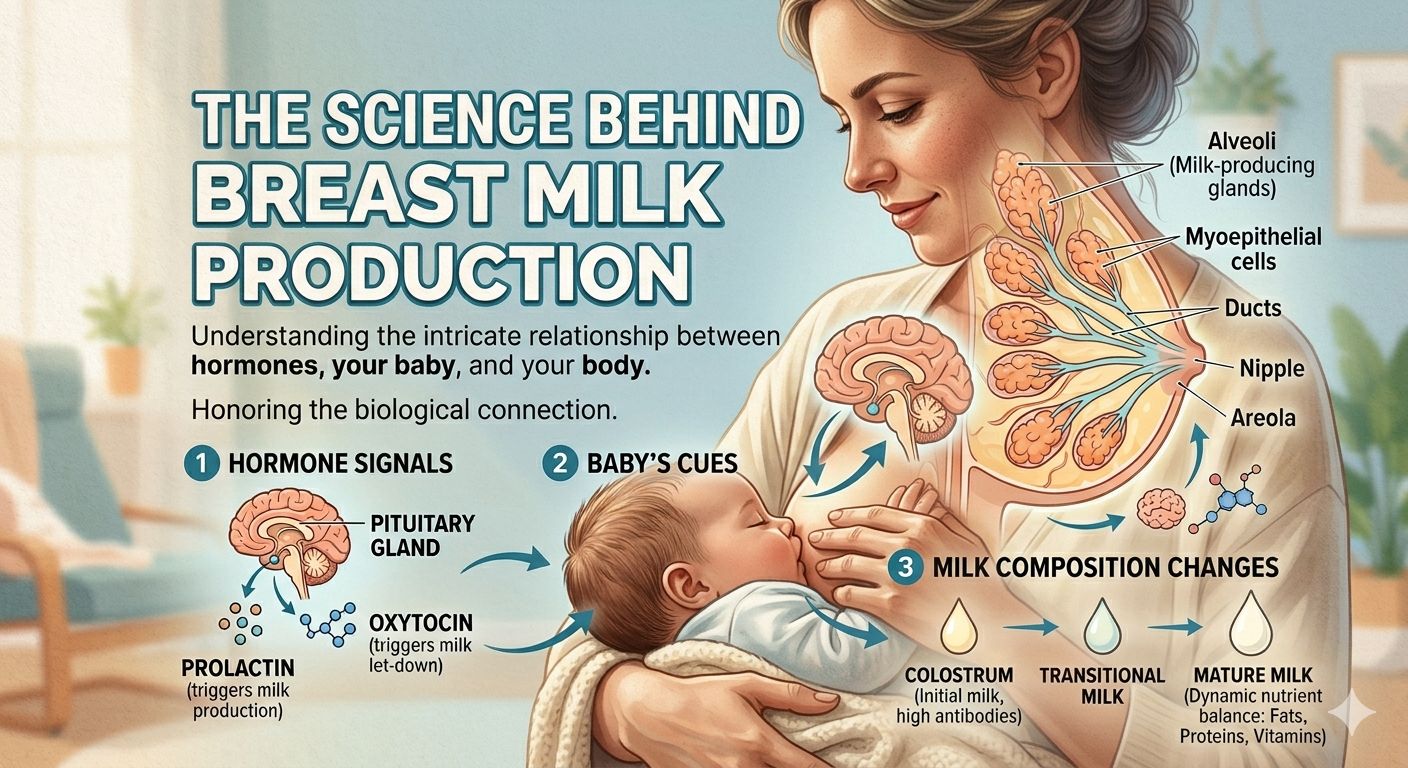

THE SCIENCE BEHIND BREAST MILK PRODUCTION
How Breast Milk Is Made:
Breastfeeding is a biological process, not a test of endurance or perfection. Milk supply is
adaptable, responsive, and supported by your body’s design. With frequent milk removal,
nourishment, and support, most mothers can establish and sustain a healthy supply.
DURING PREGNANCY (13 week of pregnancy), hormones prepare the breasts to make milk.
AFTER BIRTH –
Hormone prolactin stimulates milk production
Hormone oxytocin, causes the let-down reflex, allowing milk to flow.
WHY frequent feeding or pumping is so important, especially in the early weeks?
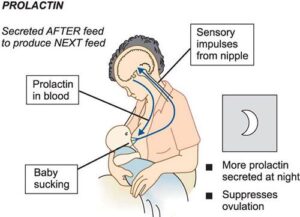
- The more milk is removed from the breast, the more milk your body is signaled to
produce. - If no sucking stimulation at breast, no signals are sent to the brain to produce the
milk. - Breast milk production works on a supply-and-demand
system.
What Controls Milk Supply?
Milk production is influenced by several key factors:
- Frequency of feeding or pumping – more often = more milk
- Effective milk removal – good latch or proper pump use matters
- Hormones – stress and fatigue can interfere with oxytocin
- Maternal health – hydration, nutrition, rest, and overall wellbeing
Milk supply naturally adjusts to your baby’s needs over time.
Is The Early Days Matter
The first 2–6 weeks after birth are critical for establishing supply.
- Newborns typically feed 8–12 times in 24 hours
- Night feeds are especially important because prolactin levels are higher
- Engorgement or frequent feeding does not mean low supply—it’s often part of normal
adjustment
Maintaining a Sustainable Milk Supply
To support ongoing milk production:
Feed or pump frequently
- Avoid long gaps, especially early on
- Aim to fully empty the breasts
Ensure a good latch
- A deep, comfortable latch improves milk transfer
- Seek help early if feeding is painful
Look after your body
- Eat balanced meals and drink to thirst (3 liters of water every 24 hours)
- Rest whenever possible
- Manage stress—calm helps oxytocin work better
Trust your body
- Soft breasts and cluster feeding are normal
- Babies feed for comfort and growth, not just hunger
Cluster feeding
A normal, temporary, and exhausting, yet vital, phase in the first few days/weeks where newborns
feed intensely—sometimes hourly—to boost milk supply and satisfy growth spurts, often during
evenings. It signifies the baby is getting enough milk, not that you have a low supply
- Why it happens: Newborns have tiny stomachs and need frequent nourishment,
especially as they grow rapidly, usually between day 1 and 3-4 months. - When it happens; most common in the evening or early morning hours.
- Duration: Often lasts for a few hours at a time, particularly when establishing milk
supply in the first few weeks. “DON’T STRESS ,IT WILL PASS”
COMMON MYTHS
❌ “Small breasts make less milk”
✔ Breast size does not determine milk production
❌ “You must feel full to have enough milk”
✔ Milk can be produced continuously, even when breasts feel soft
❌ “Frequent feeding means low supply”
✔ frequent feeding is how supply is built and maintained
When to Seek Support
Get help if you notice:
- Persistent pain or nipple damage
- Poor infant weight gain
- Very low wet diapers
- Concerns about supply despite frequent feeding
Lactation consultants, midwives, and healthcare providers can help early—support makes a big
difference.